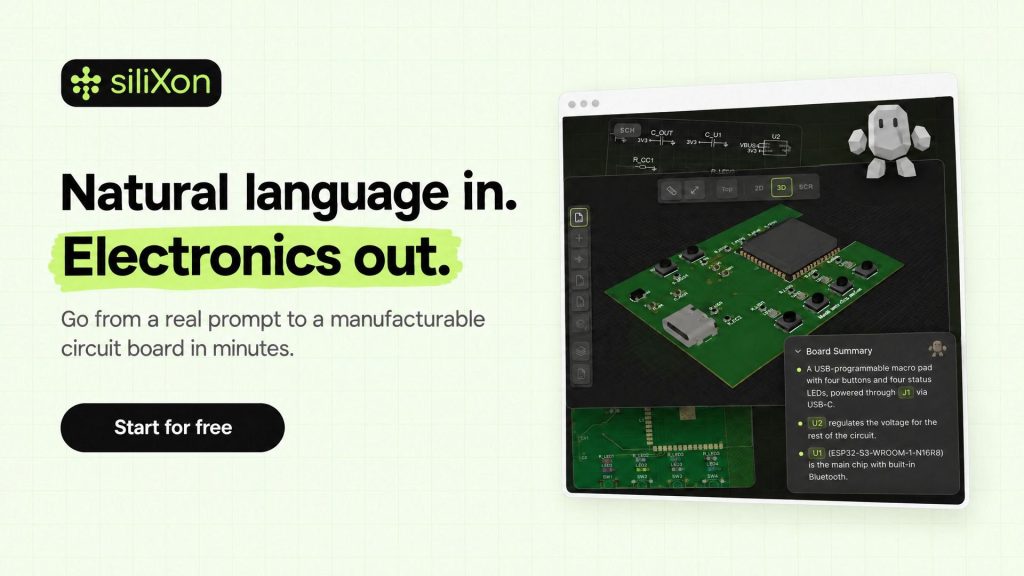

Designing electronic circuit boards traditionally requires technical knowledge, specialized software, and an understanding of electronic components. But artificial intelligence is making the process more accessible.
siliXon is an AI-powered PCB design tool that allows users to describe an electronic gadget in plain English and generate a circuit board design that can be prepared for manufacturing.
Powered by an AI assistant called Rocky, siliXon helps users turn product ideas into practical electronic designs without requiring extensive experience in electronics engineering.
The platform is currently in beta and is particularly suited to simple digital circuit board projects.
What Is siliXon?
siliXon is an AI-based electronic design platform that simplifies the process of creating printed circuit boards (PCBs).
Instead of manually selecting every component and building a circuit from scratch, users can explain what they want to create using natural language.
For example, someone could enter:
“Design a small Bluetooth remote control with three buttons and a rechargeable battery.”
Rocky, siliXon’s AI assistant, interprets the request, asks relevant technical questions, and helps generate a circuit board design using commercially available electronic components.
The goal is to make PCB design more accessible to inventors, students, entrepreneurs, and hobbyists.
How Does siliXon AI Work?
siliXon combines natural language processing with electronic design automation to help users create circuit boards through a conversational workflow.
Step 1: Describe Your Electronic Project
Visit silixon.io and describe the electronic device you want to build.
You do not need to begin with a complete circuit diagram. A simple explanation of the intended functionality can provide a starting point.
Step 2: Answer Questions From Rocky AI
Rocky analyzes your idea and asks questions about technical requirements.
These may involve connectivity, power supply, controls, or other components required for the project.
Users can provide their own preferences or select options recommended by the AI assistant.
Step 3: Generate the Circuit Board Design
Based on the project requirements, siliXon helps create a PCB design using real electronic components.
The platform aims to select parts that can be purchased from component suppliers, making the resulting design more practical for physical production.
Step 4: Customize Your PCB
Users can refine the design through an interactive interface.
They can move components, adjust the board layout, or ask Rocky to make changes through the chat interface.
This conversational approach reduces the need to learn every feature of traditional PCB design software before starting a project.
Step 5: Export Manufacturing Files
Once the design is ready, users can download the relevant project files and submit them to a PCB manufacturing service.
Before production, the design should be reviewed for electrical correctness, component compatibility, and manufacturing requirements.
Key Features of siliXon AI
1. Text-to-PCB Design
siliXon allows users to describe electronic projects in everyday language rather than starting with complex circuit design software.
2. Rocky AI Assistant
Rocky guides users through the design process, asks technical questions, and recommends suitable options.
3. Real Electronic Components
The platform focuses on creating designs using components that are commercially available, rather than purely conceptual circuit diagrams.
4. Interactive PCB Customization
Users can adjust board layouts by moving components or requesting modifications through AI-powered chat.
5. Manufacturing File Export
siliXon supports a workflow intended to help users move from a digital circuit board design toward physical manufacturing.
6. Beginner-Friendly Design Process
The conversational interface makes the platform approachable for people who have product ideas but limited PCB design experience.
siliXon Pricing: Is It Free?
According to the supplied product information, siliXon currently offers a free beta plan.
The reported free plan includes:
- One complete PCB design project every two weeks.
- Access to Rocky AI for project guidance.
- Interactive circuit board design and customization.
- No credit card required to get started.
Pricing, usage limits, and included features may change during the beta period. Users should check the official siliXon website for current plan details.
Who Should Use siliXon?
siliXon may be useful for several types of users.
Electronics Beginners: People who want to experiment with electronic circuits without extensive design experience.
Students and Educators: Learners exploring circuit boards, electronic components, and product development.
Hardware Startup Founders: Entrepreneurs who want to explore early-stage electronic product concepts.
DIY Makers and Hobbyists: Individuals building custom gadgets, controllers, and small electronic devices.
Product Designers: Professionals who want to explore electronic prototypes before committing to a more detailed engineering process.
What Can You Build With siliXon?
The platform is currently best suited to relatively simple digital electronic projects.
Potential project ideas include:
- Bluetooth remote controls.
- LED controllers.
- Simple sensor monitoring boards.
- Button-based electronic interfaces.
- Small microcontroller projects.
- Basic smart-device prototypes.
Actual project support depends on the platform’s capabilities, component availability, and design complexity.
More advanced applications involving high-voltage electronics, sophisticated radio-frequency circuits, or safety-critical hardware may require specialized engineering tools and professional review.
siliXon vs Traditional PCB Design Software
Traditional PCB design applications such as KiCad and Altium Designer provide extensive engineering capabilities, but users generally need to understand electronic schematics, circuit layouts, and manufacturing constraints.
siliXon takes a different approach by introducing an AI-guided design process.
| Feature | siliXon | Traditional PCB Software |
|---|---|---|
| Design input | Natural language and interactive editing | Manual schematic and PCB design |
| AI guidance | Rocky AI assistant | Depends on the software |
| Beginner accessibility | Designed for simpler onboarding | Often requires technical learning |
| Component selection | AI-assisted | Primarily designer-controlled |
| Complex PCB development | Limited during beta | Broad professional capabilities |
| Manufacturing workflow | Export-oriented | Established production workflows |
siliXon is not necessarily a replacement for professional electronic design software. Instead, it may provide a simpler starting point for early-stage projects and less experienced users.
Advantages of AI-Powered PCB Design
AI-assisted electronic design could make hardware development more accessible by reducing some of the technical barriers involved in creating a first prototype.
Potential benefits include faster concept exploration, guided component selection, simplified design workflows, and easier experimentation.
For entrepreneurs, these tools may help evaluate electronic product ideas before investing in more extensive development.
For students and hobbyists, conversational AI could also provide a more approachable introduction to circuit board design.
However, AI-generated hardware designs still require validation. Incorrect component choices, unsuitable electrical connections, or layout problems can result in devices that fail to operate safely or reliably.
Limitations of siliXon
Because siliXon is currently in beta, users should consider several limitations.
The platform is reportedly most effective for simple digital boards rather than highly complex electronics.
AI-generated designs may also require manual review, testing, and adjustments before manufacturing.
Component availability, power requirements, electrical safety, and manufacturing tolerances remain important considerations.
For commercial products, additional engineering validation and regulatory compliance may be necessary.
The Future of AI in Electronics Design
Artificial intelligence is increasingly being integrated into software development, engineering, product design, and manufacturing.
Tools such as siliXon demonstrate how conversational interfaces could simplify technical workflows that previously required specialized expertise.
As AI-assisted electronic design technology develops, future platforms may offer more sophisticated component selection, automated circuit verification, improved PCB layouts, and tighter manufacturing integrations.
These developments could help more individuals and small businesses experiment with hardware innovation.
Conclusion
siliXon offers an accessible approach to electronic circuit board design by allowing users to transform plain-English descriptions into PCB projects.
With its Rocky AI assistant, interactive editing tools, and manufacturing-oriented workflow, the platform aims to make early-stage electronics development easier for beginners, makers, and entrepreneurs.
Although its beta capabilities are currently focused on simpler digital projects, siliXon illustrates the growing potential of AI-powered engineering tools.
For anyone interested in building an electronic gadget without starting from a blank circuit diagram, siliXon could be a useful platform to explore.
Explore the tool at silixon.io.
Note: Features and free-plan limits are based on the supplied product description and have not been independently verified. Check the official website for the latest availability and pricing.