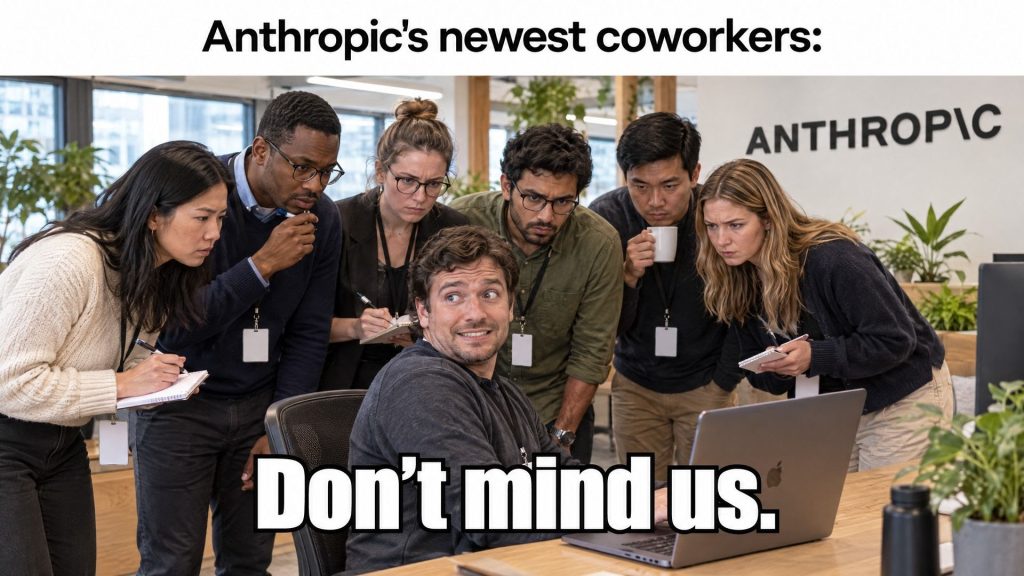

Anthropic, the artificial intelligence company behind Claude AI, has announced a new initiative to strengthen independent AI safety oversight by allowing six researchers from the nonprofit organization METR to work directly inside its offices.
The arrangement gives external AI safety researchers access to company resources, internal systems, and relevant technical information to evaluate potential risks associated with advanced artificial intelligence models.
According to the announcement, METR will retain the right to publish its findings independently, without requiring Anthropic’s approval.
The initiative represents an important development in AI governance, particularly as technology companies face growing pressure to demonstrate that their increasingly powerful AI systems are being tested responsibly.
What Is Anthropic’s New AI Safety Oversight Program?
Anthropic has introduced an arrangement that embeds six researchers from METR within the company’s working environment.
METR is a nonprofit organization focused on evaluating the capabilities and potential risks of advanced AI systems.
Under the arrangement, participating researchers receive company computers and access comparable to that provided to Anthropic’s internal risk assessment teams.
Anthropic employees are encouraged to collaborate with the researchers and share relevant technical information.
However, certain sensitive materials, including customer data, remain restricted.
The objective is to enable independent researchers to conduct more comprehensive evaluations than would typically be possible through public-facing AI interfaces alone.
Who Is METR and What Does It Do?
METR is an independent nonprofit organization specializing in the evaluation of advanced artificial intelligence systems.
Its research focuses on understanding what increasingly capable AI models can accomplish, how reliably they perform complex tasks, and what risks may emerge as their capabilities improve.
METR’s work includes evaluating:
- Autonomous AI Capabilities: Whether AI agents can independently complete complex, multi-step tasks.
- AI Safety Risks: Potentially dangerous or unintended behaviors associated with advanced models.
- Model Reliability: How consistently AI systems operate under different conditions.
- AI Agent Performance: The ability of AI models to interact with software, tools, and digital environments.
- Risk Assessment Methods: Techniques for identifying emerging risks before advanced AI systems are widely deployed.
By working directly with Anthropic’s internal teams, METR researchers may gain access to information that supports more detailed evaluations.
METR Can Publish Its Findings Without Anthropic’s Approval
One of the most significant features of the agreement is METR’s reported editorial independence.
According to the announcement, Anthropic cannot prevent METR from publishing its research findings.
The company can request or require redactions only within a limited set of predefined categories.
METR also retains the ability to publicly explain whether those redactions were justified.
This approach is intended to reduce the possibility that unfavorable research results could be withheld simply because they might damage a company’s reputation.
Independent publication rights are particularly important in AI safety research because developers may have commercial incentives to emphasize the benefits of their technologies while minimizing discussion of potential weaknesses.
However, meaningful independence will also depend on how the arrangement operates in practice, including which systems researchers can access and whether they can report significant concerns without interference.
Why Independent AI Auditing Matters
As AI models become more advanced, evaluating their safety is becoming increasin